


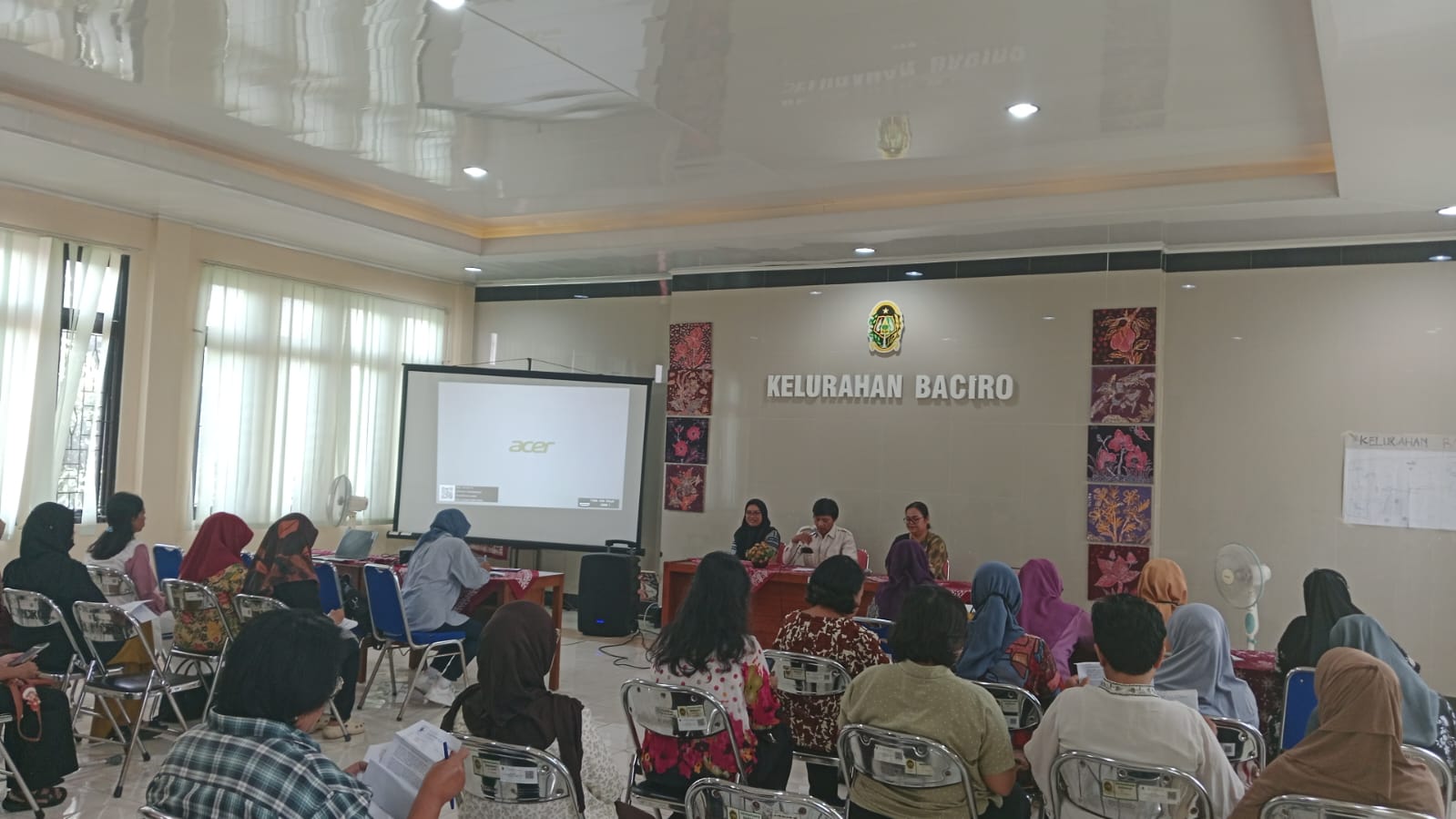
YOGYAKARTA – Residents of Baciro Village are mapping out the issues in their own neighborhood themselves, ranging from garbage odors, inaccessible infrastructure for persons with disabilities, to indications of discrimination at boarding houses advertising as “Muslim-only.” This participatory mapping was conducted during a Focus Group Discussion (FGD) with the Indonesian Justice and Peace Foundation (YKPI) on Thursday (20/2/2026).
The FGD served as an alternative approach to development planning, which has so far relied solely on formal forums like the Development Planning Deliberation (Musrenbang). The activity brought together representatives from neighborhood associations (RW), PKK cadres (family welfare program members), disability groups, and other community elements to identify issues related to gender equality, disability, freedom of religion, and the environment.
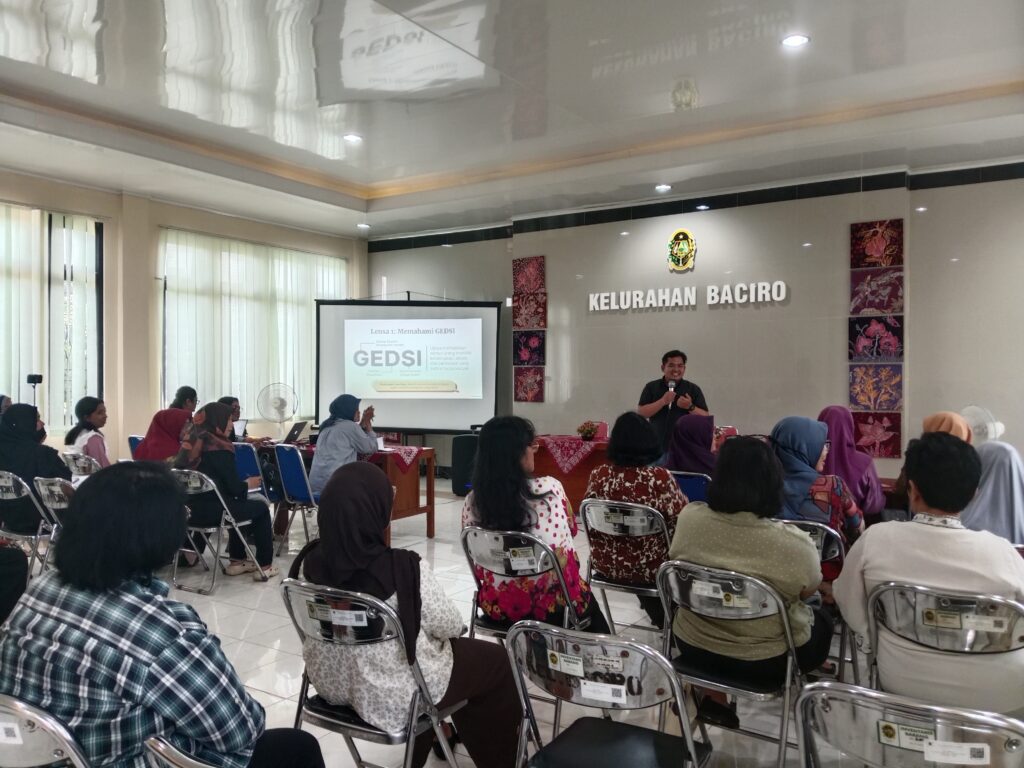
“Participation isn’t just about being present and signing attendance; it’s about voicing opinions and ensuring the needs of vulnerable groups are accommodated,” said Rully, a facilitator from Mitra Wacana, in his introduction to the discussion.
Positioning Residents as Experts on Their Own Territory
The problem mapping utilized a village map method. Participants were encouraged to look at surface-level issues as well as their root causes, both cultural and structural. “Ladies and gentlemen, you are the experts on Baciro. We only observe from the outside,” Rully stated.
Participants were asked to place colored stickers on the village map according to problem categories:
- Yellow: Issues related to Gender Equality, Disability, and Social Inclusion (GEDSI).
- Red: Issues related to Freedom of Religion or Belief (FoRB).
- Green: Ecological issues.
Findings on the Ground: From Waste to Exclusive Boarding Houses
- Garbage Odor and Loudspeakers: Residents living behind the Mandala Krida area complained about the smell of garbage, especially during rain. A petition had been submitted, and cleanup efforts were made temporarily, but the problem resurfaced due to a lack of sustainable follow-up.
Another complaint came from the sound of loudspeakers from a place of worship in a neighboring village, which could be heard in Baciro. - River Waste and “Muslim-Only” Signs: Residents reported that waste, including disposable diapers, clogs a small river during rains. They suspect the waste originates from outside the area, including from boarding house residents.
Interfaith relations are generally considered harmonious. However, several boarding houses displaying “Muslim-only” signs have drawn concern, as they are seen as potentially discriminatory. - Stray Animals and Unwanted Pregnancies: Pets released at night have become a source of complaints. On another front, there are cases of unwanted pregnancies that remain unresolved due to administrative barriers related to the legal age for marriage.
- Disability Access No Longer Prioritized: A representative from a disability group highlighted that organizations of persons with disabilities (OPDs) have not been re-involved in the Musrenbang process since previously being active in 2018–2019. Physical access to public facilities, such as wheelchair ramps blocked by parked vehicles, also remains an obstacle. Health screening services are also considered not yet fully disability-friendly.
Deepening the Issues: From Biopores to Unwanted Pregnancies
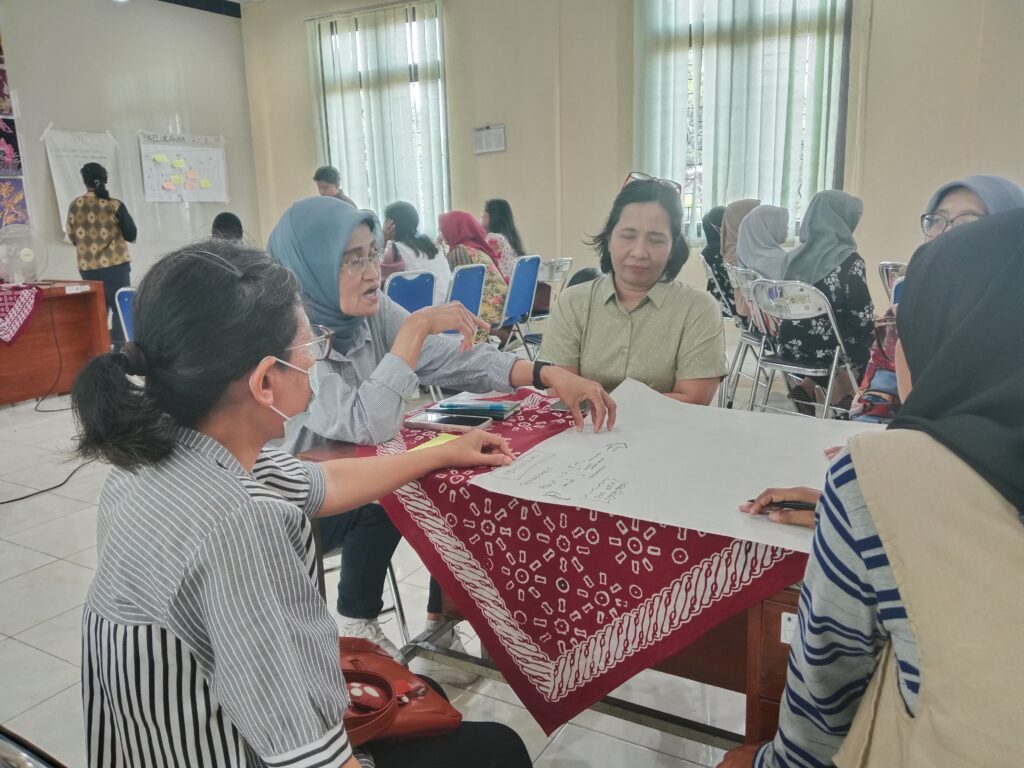
Following the initial mapping, participants divided into four groups: FoRB, GEDSI, Ecology, and Participatory Planning & Budgeting.
- Freedom of Religion or Belief (FoRB):
- The loudspeaker issue is specific to certain areas.
- Uneven participation in cross-faith religious celebrations.
- Conflict resolution mechanisms currently rely on neighborhood forums involving the military/ police (Babinsa) and local figures.
- Prevention efforts are made through interfaith forums and PKK activities based on Pancasila values.
- Ecology:
- Flood potential and fluctuation in food prices during extreme weather seasons.
- Almost all RWs have waste banks.
- Wet waste management through maggot cultivation is being developed.
- Biopore infiltration holes programs have been implemented; the main challenge lies in the consistency of residents’ behavior.
- GEDSI (Gender, Disability, Social Inclusion):
- Unwanted pregnancies have economic and social impacts on families.
- Children are exposed to online gaming in groups.
- Health services are not yet inclusive for persons with disabilities.
Residents recommended counseling to prevent child marriage, education on adolescent reproductive health, joint monitoring of children’s activities, and the integration of disability groups into village planning.
- Participatory Planning & Budgeting:
- The need to reactivate the role of OPDs in Musrenbang.
- Encouraging regular meetings for disability groups.
- Strengthening programs based on local needs, rather than merely implementing city-level programs.
Three Strategic Recommendations
Concluding the activity, Idha, the CO of YKPI, summarized three points to be followed up on:
- Facilitate a multi-stakeholder forum on freedom of religion to strengthen dialogue and conflict prevention.
- Encourage the involvement of disability groups in planning and budgeting to make development more inclusive.
- Propose programs for preventing unwanted pregnancies through education and strengthening the role of families and the community.
Towards an Inclusive Baciro
This FGD demonstrated that Baciro residents possess a collective awareness to build a more just environment. The challenges that emerge are not merely technical but also pertain to culture, systems, and policy sustainability.
Through open dialogue, Baciro Village is striving to ensure that every citizen including persons with disabilities and other vulnerable groups feels safe, heard, and involved in development.
This activity serves as an initial step toward strengthening village-level governance that is responsive to the needs of its residents.
Follow YKPI’s organizing efforts through their website at ykpindonesia.org, on Instagram @ykpibinadamai, or on Facebook at Ykpi Bina Damai.