


Captive marriage, or in the local Sumbanese language (Anakalang) known as Yappa Marada (capture in the field) or Yappa Mawini (capture women), is an ancient practice that continues to haunt Sumba Island. As explained by Reku Dedu (67), this practice is an act of forcibly taking women to be wives through violence. More than just a tradition, Yappa Marada is a form of structured violence that violates women’s human rights, persisting into the 21st century despite being against national and international law.
This practice is rooted in unilateral coercion. A man who likes a woman, without consent or reciprocal feelings, will “possess” her through forced capture. The method is organized and brutal: Carried out in groups by several men. Targeting women when they are alone and off guard – in markets, gardens, springs, rice fields, parties, or even after school. Involving physical violence (pulling, grabbing, hitting, groping) and psychological violence (threats, intimidation).
The victim’s resistance actually resulted in more violent treatment. The impact haunts her for life. Women who are victims of captive marriages suffer deep physical and psychological trauma, which continues to haunt her life, even if she ends up marrying the perpetrator.
Legal Gaps and Neglect in Sumba
Ironically, the legal framework protecting women from violence and guaranteeing freedom of choice in marriage has long existed in Indonesia: the 1945 Constitution, Marriage Law No. 1/1974, Law No. 7/1984 (ratification of CEDAW), the Criminal Code, Law No. 39/1999 on Human Rights, the Child Protection Law and the TPKS Law (Criminal Acts of Sexual Violence). Even in 2020, four Regents in Sumba signed an MoU to eliminate captive marriage, attended by the Minister of Women’s Empowerment and Child Protection (PPPA). However, this commitment stalled because the socialization did not extend to the community, the practice continued in the name of “custom-culture”.
There were even two cases reported to the NTT Regional Police in 2020 that were not processed, on the grounds of “culture” and “lack of evidence”. And new cases still occurred on July 25, 2022, after the TPKS Law came into effect, indicating a failure of policy communication.
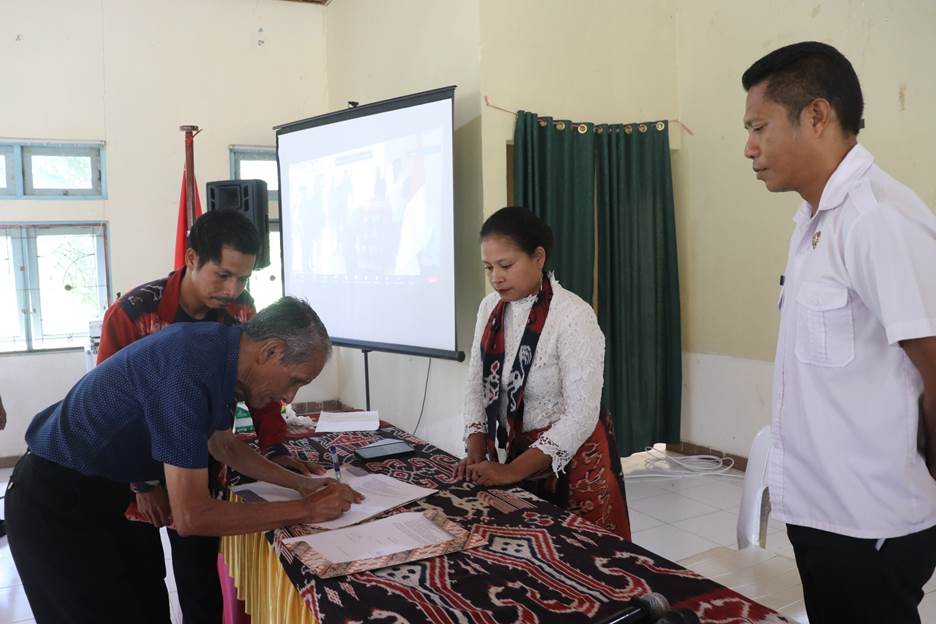
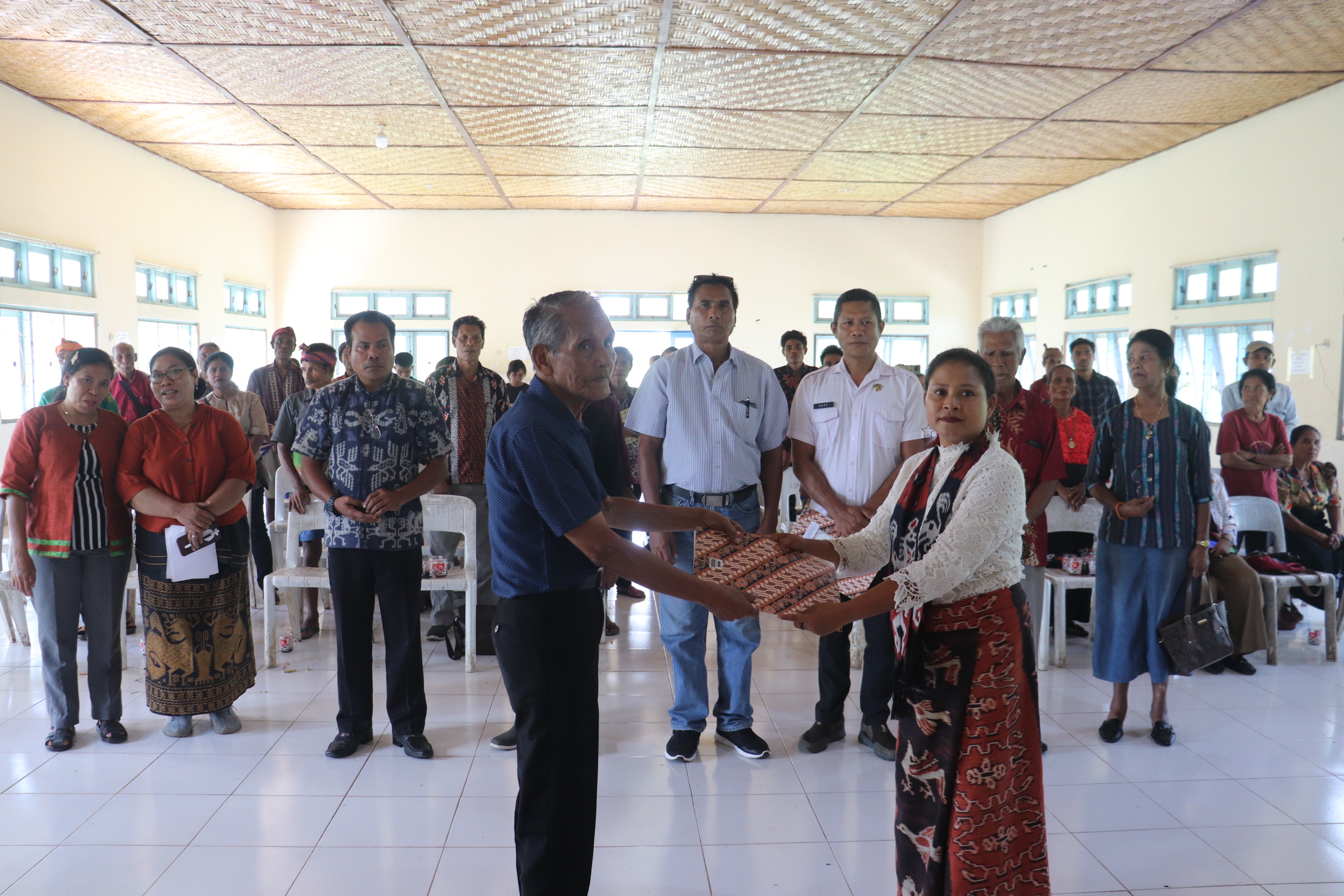
In response to this critical situation, the Sopan Sumba organization with the support of the Indonesian Justice and Peace Foundation (YKPI) made a significant breakthrough. They held a workshop and succeeded in rallying the commitment of the traditional leaders of Central Sumba. On May 11, 2024, the Determination and Launching of the Decision of the Traditional Institution on the Customary Regulation to Stop Captive Marriage in Central Sumba was carried out. This historic event was attended by 64 people from various key elements: traditional leaders, village/district governments, NGOs, church representatives (Catholic & Protestant), youth, media (including NHK Japan and iNews), KPAI, National Commission on Violence Against Women, Ministry of PPPA, and school representatives.
Key Messages and Commitments from the Launch:
- Ministry of PPPA (Deputy for Protection of Women’s Rights): Appreciates the synergy of traditional leaders, SOPAN, government, and the community in rejecting all forms of violence against women, especially marriage by capture.
- Assistant I to the Regent of Central Sumba: Affirms that marriage by captive is not an original culture of Sumba and must be abolished because it violates humanitarian values. Calls for shared responsibility and vigilance against forms of “modern marriage by captive”.
- National Commission on Violence Against Women: Emphasizes the importance of ongoing communication for the elimination of violence against women, ensuring that this issue becomes a concern for cross-leadership.
- KPAI: Encourages the governments of the four Sumba districts and law enforcement to seriously address violence against women and children.
- Traditional Leader (Umbu Sangaji): States that marriage by captive is a violation of customary law (as evidenced by the existence of customary fines for perpetrators). Urges for widespread dissemination of this document as a guide for the community.
- NGO Sabana Sumba (Rambu Amy): States that education is the main key to stopping marriage by captive.
- Director of Sopan Sumba: Emphasized the importance of synergy between all parties, especially traditional leaders, in this process and asked for continued support to combat marriage by captive.
- Customary Leader of Kabelawuntu Village (U. R. Landumay): Declared the practice of marriage by capture officially rejected and urged socialization to villages and acceleration of the issuance of Regional Regulations (Perda) on the rejection of marriage by captive.
Towards a Sumba Free of Captive Marriage
The launch of the Customary Regulation Stopping Captive Marriage in Central Sumba in May 2024 was an important turning point. This is an official recognition from the highest customary authority that Yappa Marada is not a legitimate tradition, but rather violence that is contrary to humanitarian values and laws, both national and customary. The cross-sector commitment seen in the event gives new hope.
However, the struggle is not over. This momentum must be followed by concrete follow-up:
- Intensive Socialization: Customary documents and legal awareness (especially the TPKS Law) must be disseminated to remote villages.
- Implementation of Customary & Legal Sanctions: Customary fines and criminal sanctions based on the TPKS Law must be enforced without discrimination against perpetrators.
- Education & Empowerment: Building an understanding of gender equality, women’s rights, and healthy marriage alternatives for the younger generation, as emphasized by Rambu Amy.
- Regional Regulation on Rejecting Captive Marriage: The demand from the Kabelawuntu Village traditional leaders to immediately issue a Regional Regulation needs to be realized by the Central Sumba Regency Government and other regencies in Sumba.
- Strengthening the Reporting & Assistance System: Ensuring victims have easy access to report and receive legal and psychosocial assistance.
The May 2024 customary agreement is a ray of light that marks the beginning of the end of Yappa Marada practices in Sumba. With continued commitment from all stakeholders – customary, government, community institutions, religions, and citizens – the hope for a Sumba that respects the dignity and rights of women without violence is not just a dream. A future without captive marriages begins now.
To understand more deeply, you can watch the documentary video via the link https://www.youtube.com/watch?v=s23Q2o8mWIQ and read the agreement document here