


Dozens of residents of Baciro Village, Gondokusuman, participated in the Early Detection of Intolerance, Radicalism, and Extremism (IRE) Local Training at the local Village Hall, Wednesday (3/19/2025). The activity was organized by Mitra Wacana which was supported by the Indonesian Justice and Peace Foundation (YKPI). This training aims to strengthen public understanding in recognizing early signs of IRE and building self-protection and community strategies.
A total of 24 participants from various groups, including women, youth, religious figures, and representatives of the village government, participated in this activity enthusiastically. This training is part of the program Knitting Interfaith Collaboration in Efforts to Prevent Intolerance, Radicalism, and Extremism, which was presented as a response to the increasing cases of intolerance in Yogyakarta. This city, known for its diversity, faces various challenges, such as hate speech, discriminatory actions, and tensions based on differences in identity that can threaten social harmony. Therefore, understanding early detection of IRE is very important.
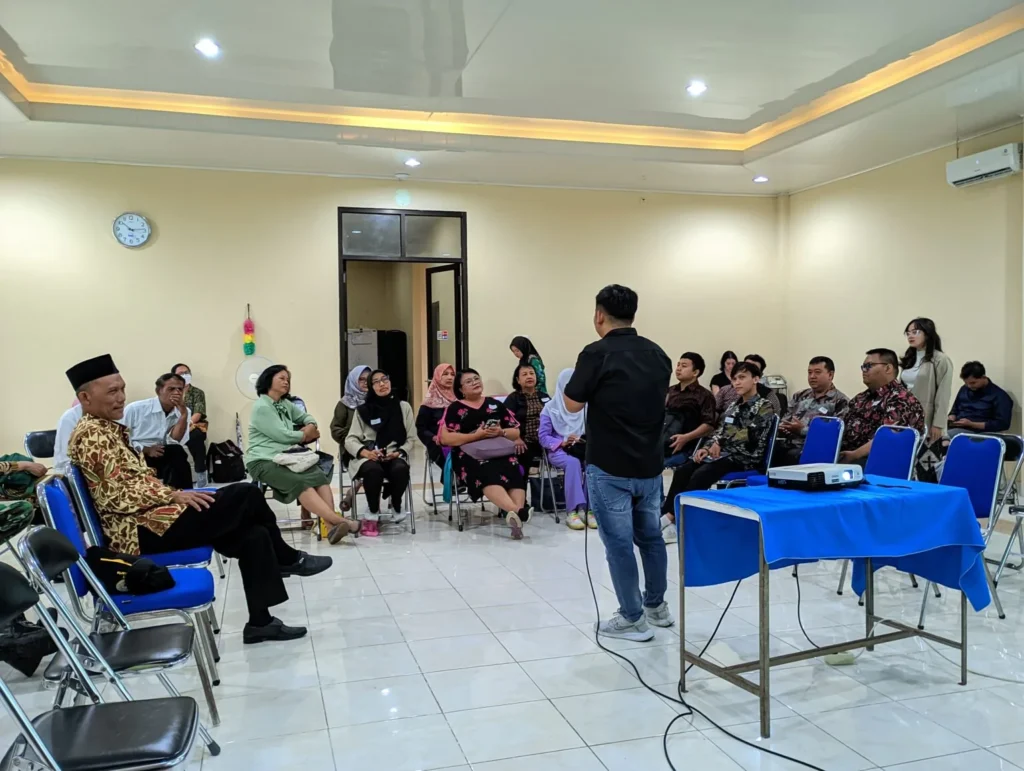
In his speech, Lurah Baciro, Sutikno, emphasized the importance of preventive efforts to maintain peace and harmony in his area. “Baciro Village is a miniature of Yogyakarta: dense, pluralistic, yet prone to friction. This training is an important step in building collective awareness so that conflict can be prevented as early as possible. We really appreciate Mitra Wacana for this initiative,” he said.
Two speakers with different backgrounds were presented to provide in-depth perspectives. Bernadus Bayu Laksmono, a representative from Kesbangpol of Yogyakarta City, discussed the current situation related to IRE, recognizing forms of intolerance, and early detection strategies. He also presented several case studies of intolerance incidents that have occurred in Yogyakarta as learning for participants. Meanwhile, Wiwin Siti Aminah Rohmawati from Srikandi Lintas Iman Yogyakarta invited participants to explore ways to eliminate prejudice against different groups, build constructive interfaith dialogue, and understand strategies for protecting themselves from the negative influence of IRE.
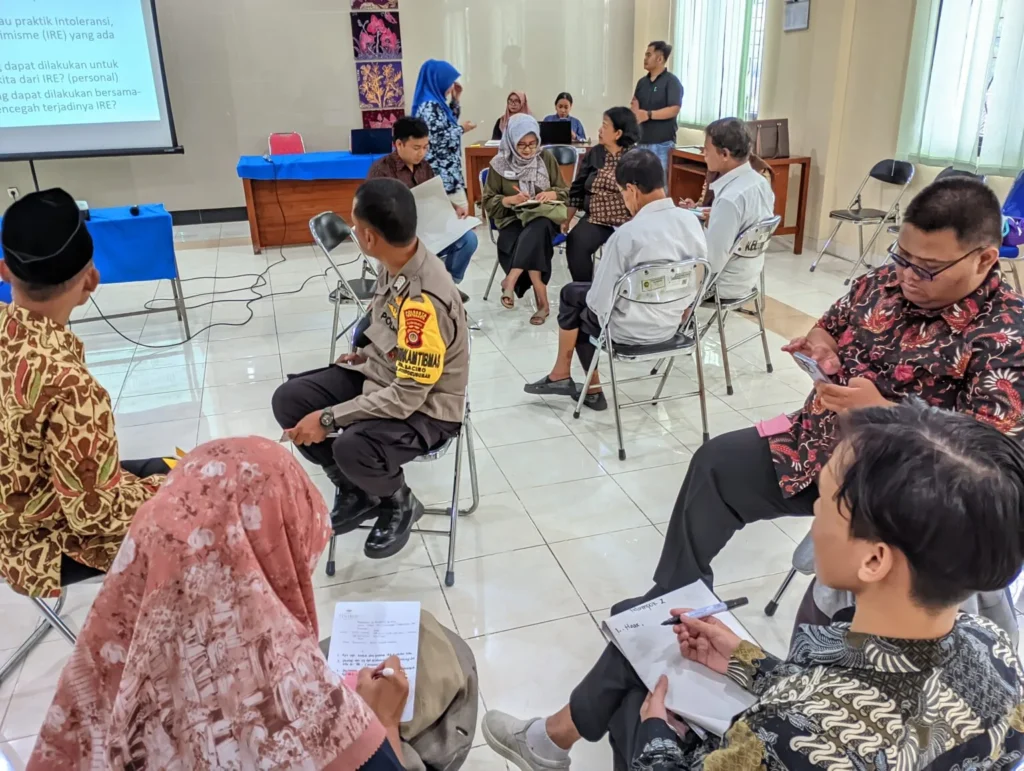
Not only a material presentation session, this activity also prioritizes interactive discussions and simulations in identifying IRE potential in the surrounding environment. Participants are invited to share experiences and discuss solutions that can be applied in their respective communities. With a participatory method, this training has succeeded in creating an inclusive dialogue space and encouraging active involvement of participants.
“We hope that this activity will not only provide understanding, but also build participants’ commitment as agents of change in their communities. By increasing awareness and skills in building healthy dialogue, we can together maintain diversity so that it remains a strength, not a source of conflict,” said Ruliyanto, Program Coordinator.
Through this workshop, it is expected that participants can understand various forms of IRE, strengthen interfaith communication networks, and build a more peaceful and harmonious environment in Baciro and its surroundings. With increasing public awareness, it is hoped that the threat of intolerance and radicalism can be prevented before it develops further.