


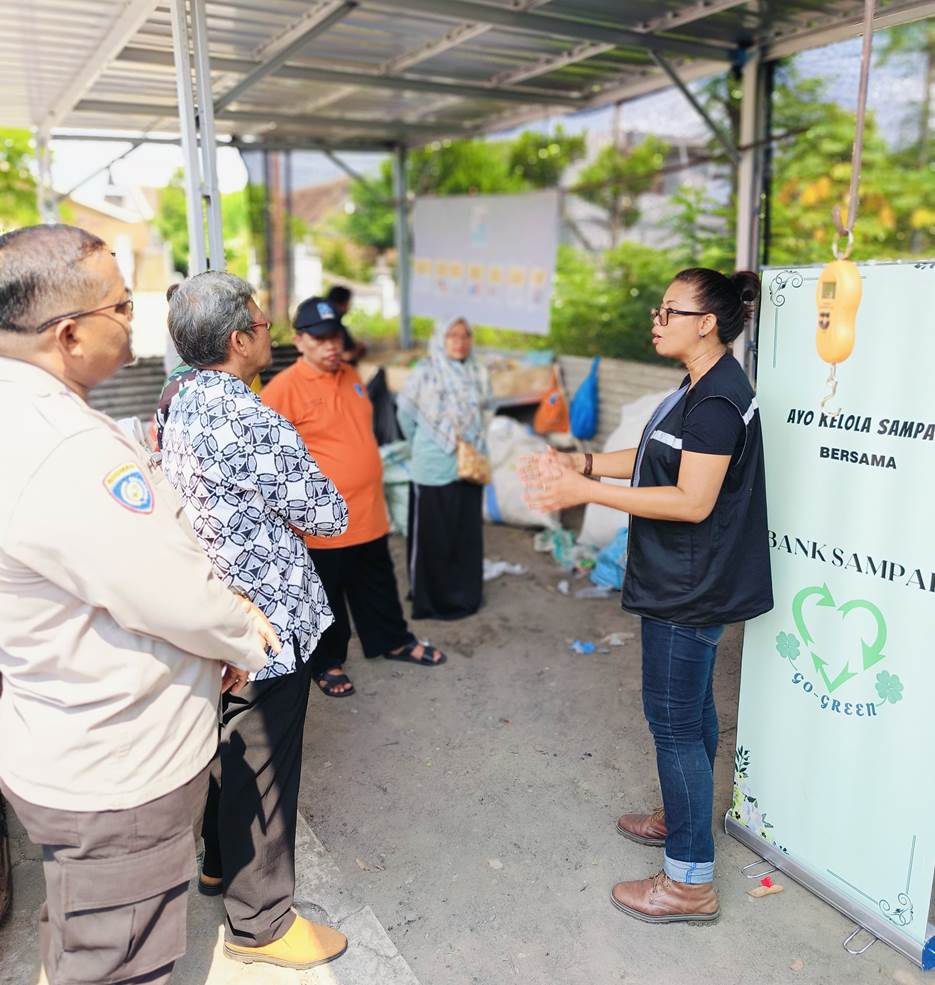
In a corner of a village called Cupuwatu in Sleman, Yogyakarta, a woman named Fransisca Supriyani Wulandari, or familiarly called Dani, lit the fire of change. Not with anger, but with concern that grew from anxiety. Dani is not an official, nor a great scientist. She is an environmental activist who started from a simple question: “Why does unsellable plastic waste continue to pile up and never really disappear?”
That anxiety slowly turned into an obsession. Dani noticed that certain types of plastic such as plastic bags, food wrappers, and Styrofoam have no selling value, cannot be managed by regular waste banks, and ultimately end up in landfills, burned in yards, or washed into rivers. This waste silently becomes a threat, polluting the land, water, and air around it.
However, the turning point came when Dani visited environmental activists in Bali. There, his friend invited him to visit the Get Plastic Indonesia Foundation, a foundation that conducts research and development on pyrolysis technology, an innovative method that can turn plastic waste into fuel oil. Dani felt like he had found a piece of the puzzle that had been missing. “This is the answer,” he thought.
Igniting Hope Through Energy
Upon returning to Cupuwatu, Dani did not wait. He invited Bank Sampah Go Green, a community that he had pioneered and nurtured to form a partnership with the Get Plastic Foundation. The opportunity came in the form of a unique educational event: a music concert and traditional market festival titled Get the Fest 2024, which carried the theme of the environment and waste management.
Dani and his team worked from the grassroots. They educated PKK mothers, visited schools, visited stalls, cafes, and food stalls, teaching them how to sort plastic waste. Residents were given special bags. The collected plastic waste was then processed through a pyrolysis machine into fuel. And here lies the miracle that the fuel from the waste was then used to light the lights and sound system of the music concert that lasted for three days.
Waste that had previously been considered useless has now become a source of energy that enlivens the stage, unites people, and voices hope.
Changes That Occur Around
What Dani did was not just waste management. He built awareness. He ignited change. Gradually, Cupuwatu residents began to sort their waste independently, depositing it at the processing site without having to be picked up. In fact, there were residents who used to burn waste in their yards, now becoming educators for their neighbors.
The social impact was also felt. The processing site has now become a learning space, visited by guests from various regions. Each visit brings good fortune, local MSMEs receive orders for food, local residents get new jobs as machine operators or sorting officers. Dani not only created a cleaner environment, but also opened the door to economic empowerment for residents.
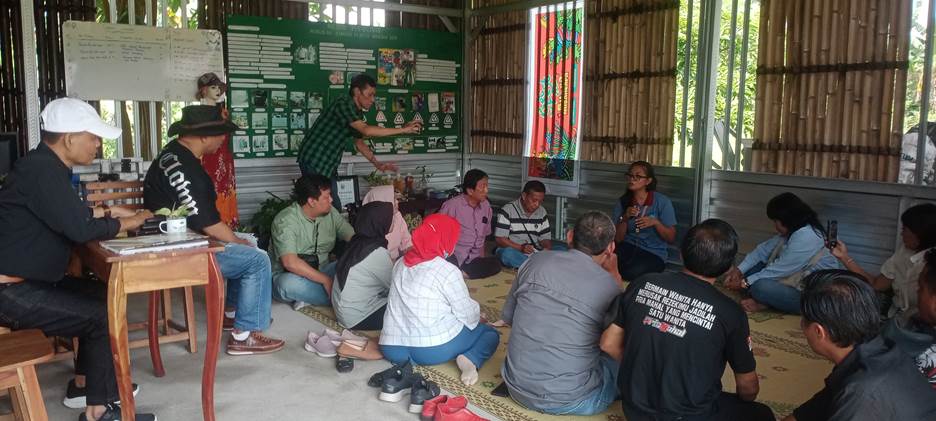
Facing Challenges, Finding Solutions
Although innovative, it does not mean that the path is always smooth. The biggest challenges come from two sides: technology and old habits. Not all types of plastic can be processed like PET (Polyethylene Terephthalate: a type of plastic that is light, strong, and transparent) and PVC (Polyvinyl Chloride: a type of plastic that is strong, durable, and flexible, but contains chlorine). Both types are dangerous for machines and humans. On the other hand, there are still many residents who are reluctant to sort their waste, arguing that they have paid waste fees or relying on the old tradition: burning.
However, Dani is not tired. He knows that change takes time and patience. Through the residents’ WhatsApp group, he continues to voice education. He posts photos of residents who diligently deposit waste, turning daily activities into a source of pride and inspiration.
Driving Community Energy and Great Expectations
For Dani, the success of this program is not only about the amount of waste that is successfully processed, but about the extraordinary potential that can occur when communities are empowered. He imagines this pyrolysis technology being present in remote areas of Indonesia, in remote villages that have difficulty getting fuel. In places like that, plastic waste can be a lifesaver for farmers who need fuel for water pumps, or fishermen who want to go to sea.
Although until today there has been no support from the local government, Dani continues to move forward. Together with the Get Plastic Foundation, he continues to develop the system, maintain process safety, and ensure that no new impacts arise from this processing.
Building a New Culture
What Dani and the Go Green Waste Bank team are doing is building a new culture—a culture of being responsible for your own waste. He dreams of every household becoming a waste management center. Because for him, waste is not just discarded goods. As his community tagline says: “Waste is not a waste until you waste it.” Waste is only waste if you think of it that way.
Conclusion: The Story That Inspired the National Movement
Dani’s story is a story of perseverance, creativity, and love for the environment. He not only processes plastic into energy, but also turns despair into hope. Through a humane and down-to-earth approach, he proves that big changes can start from small steps, from a small village, by someone with a big heart.
If one Dani can make a change this big in Cupuwatu, imagine what could happen if this movement spreads throughout the country?
Author: Rose Merry
Based on a written interview with Fransisca Supriyani Wulandari on May 11, 2025