


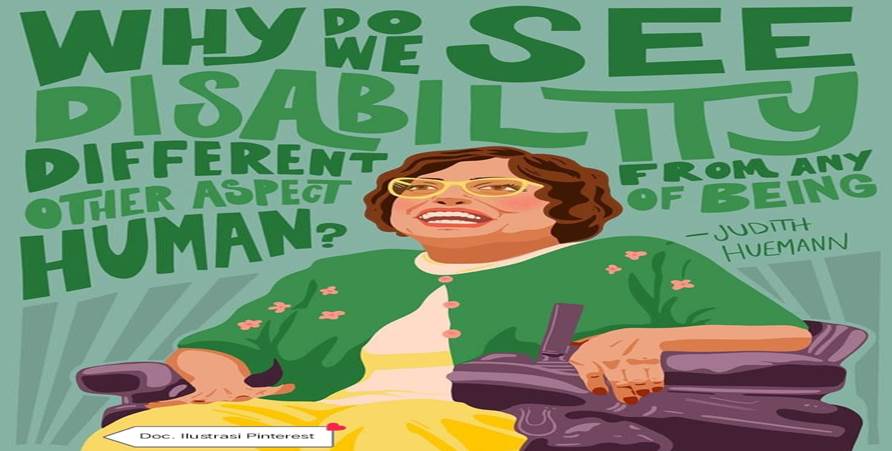
Women with disabilities often face multiple forms of discrimination, both because of their gender and their disability in everyday life. They not only struggle against stigma and discrimination related to disability, but also face gender inequality that is still rampant in various parts of the world. This causes them to experience limitations in accessing basic rights such as education, employment, health services, and social participation.
In the context of human rights, women with disabilities require special attention to ensure that they can enjoy the same rights as others. Although various international and national legal instruments have guaranteed their rights, in reality many women with disabilities still experience inequality in various aspects of life.
In this article, I try to discuss the importance of public awareness of human rights for women with disabilities as well as strategies to increase inclusivity and equality for women with disabilities.
First of all, it is important to understand that human rights are inherent rights of every individual regardless of gender, disability, race, or other background. Women with disabilities are most vulnerable to human rights violations. The Universal Declaration of Human Rights (UDHR) states that every individual is entitled to human rights without discrimination, including women with disabilities. Likewise, the Convention on the Elimination of All Forms of Discrimination against Women (CEDAW) affirms that all women, including those with disabilities, have equal rights in family life, education, health, and employment. Looking at more specific policies in the UN Convention on the Rights of Persons with Disabilities (CRPD), it affirms that women with disabilities have the right to equality in all aspects of life, including access to education, employment, and social participation and Article 6 of the CRPD highlights the double discrimination experienced by women with disabilities and calls for affirmative action to empower them. Therefore, raising public awareness of the importance of human rights for women with disabilities is a crucial first step.
One strategy to raise awareness is through education and public campaigns. Inclusive education that teaches the values of equality and respect for differences from an early age can shape a generation that is more sensitive to disability and gender issues. Public campaigns involving mass media, social media, and community leaders can also help spread the message about the importance of human rights for women with disabilities. By showcasing success stories and contributions of women with disabilities in various fields, society can better appreciate their potential and abilities.
In addition, it is important to involve women with disabilities in decision-making processes that affect their lives. Their active participation in organizations and forums that discuss public policy can ensure that their voices are heard and their needs are considered. Governments and non-governmental organizations must work together to create an environment that supports the participation of women with disabilities, including providing adequate physical accessibility and information.
The role of family and community is also very important in supporting women with disabilities. A supportive family can provide the morale boost and practical assistance needed to overcome daily challenges. An inclusive community can be a place where women with disabilities feel accepted and valued. Therefore, training and outreach programs for families and communities on how to support women with disabilities are essential. This includes training on how to communicate effectively, understand special needs, and create a disability-friendly environment.
On the other hand, supportive government policies also play an important role in ensuring the human rights of women with disabilities. Governments should develop and implement policies that eliminate barriers for women with disabilities to access education, employment, and health services. This includes providing accessible facilities, inclusive job training programs, and health services that take into account the special needs of women with disabilities. In addition, laws that protect women with disabilities from discrimination and violence must be strictly enforced.
It is also important to build networks and alliances between organizations that care about disability and gender equality. Collaboration between disability organizations, women’s organizations, and human rights organizations can strengthen advocacy and expand the reach of awareness campaigns. By working together, these organizations can support each other in advocating for the rights of women with disabilities at various levels, both locally, nationally, and internationally.
Technology can also be used to support women with disabilities in accessing information and opportunities. The use of disability-friendly technology, such as screen reader software and alternative communication applications, can help women with disabilities become more independent and engaged in society. Additionally, digital platforms can be used to disseminate information and connect women with disabilities with resources and support networks.
In conclusion, women with disabilities have the same rights to enjoy an equal and dignified life. Raising public awareness of the human rights of women with disabilities is an important step towards equality and inclusivity. Through education, active participation, family and community support, supportive government policies, organizational collaboration, and the use of technology, we can create a more inclusive and equitable environment for women with disabilities. In doing so, we can ensure that women with disabilities are not only recognized for their rights but also empowered to contribute fully to development. An inclusive and equal society not only benefits women with disabilities but also enriches our social and cultural life as a whole. With a shared commitment to respecting and protecting human rights, we can build a more just and sustainable world for all.
Although the fulfillment of the human rights of women with disabilities still faces various challenges, ranging from social stigma, limited access to education and employment, to vulnerability to violence. However, with a human rights-based approach, we can create a more inclusive world. Improving better policies, empowering women with disabilities economically, and eliminating stigma and discrimination are key steps towards achieving equality.
Author: Miftah Hilmy Afifah, Peserta Magang Youth Across Diversity of YKPI