


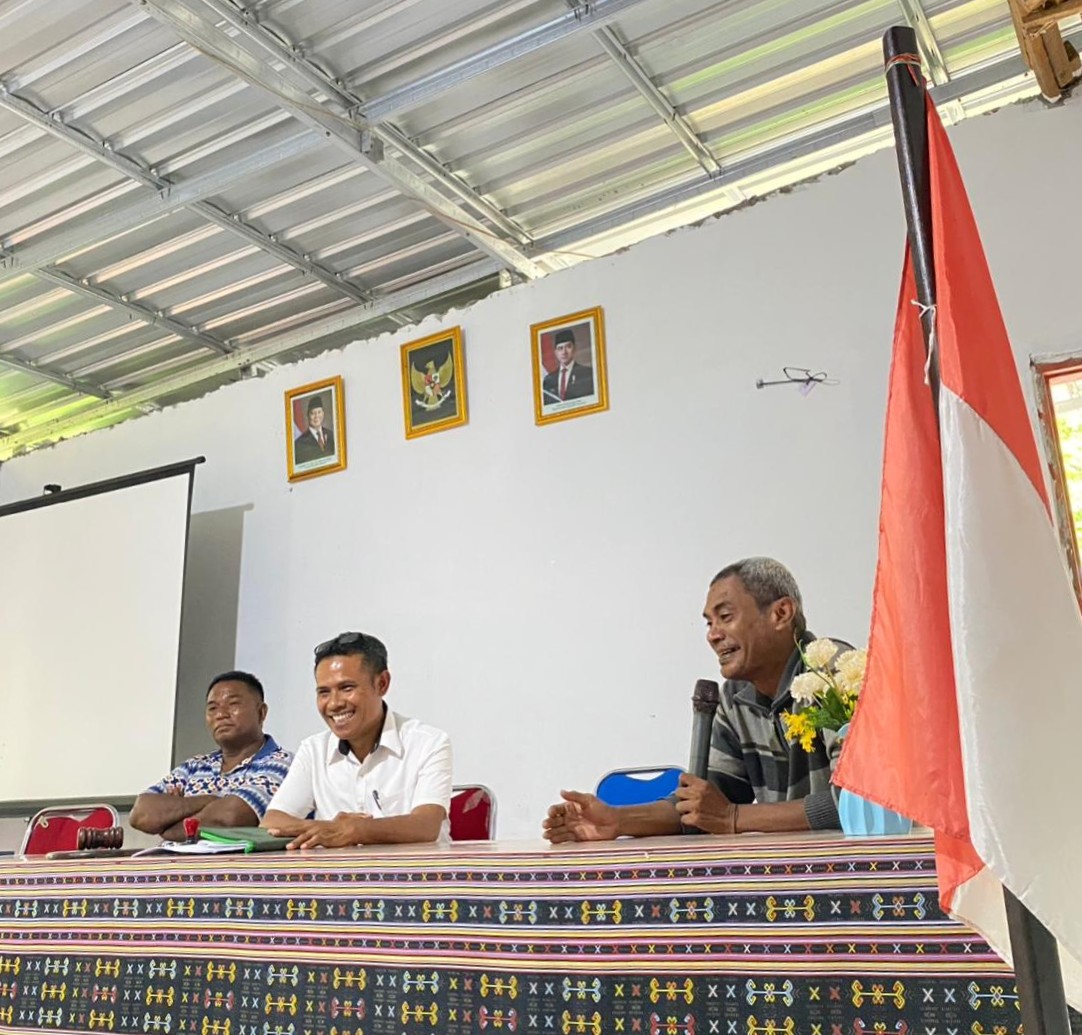
The Province of East Nusa Tenggara (NTT) holds rich cultural wealth, religious diversity, and strong local wisdom. Amidst this plurality, challenges related to freedom of religion and belief, gender equality, social inclusion, and the ecological crisis remain homework that requires collaborative and sustainable approaches. Kupang Regency, as one of the areas assisted by the Indonesian Foundation for Justice and Peace (Yayasan Keadilan dan Perdamaian Indonesia – YKPI), vividly represents this complexity.
Throughout December 2025, YKPI, through its Community Organizer (CO) team in NTT, conducted a series of preliminary activities to map the social, gender, environmental conditions, and dynamics of diversity in several villages. This work forms a crucial foundation for planning village assistance programs with perspectives of justice, inclusion, and sustainability.
Regional Context: Intersecting Diversity and Vulnerability
Kupang Regency is located in a tropical savannah region with long dry seasons, making issues of clean water, agriculture, and food security primary concerns. On the other hand, patriarchal social structures, limited access to basic services, and a lack of safe spaces for women and vulnerable groups are still found in many villages.
Although interfaith and inter-ethnic relations are generally relatively harmonious, field data and findings indicate that gender-based violence, especially Domestic Violence (KDRT) and sexual violence, still frequently occur and are often resolved through customary or family mediation mechanisms. This resolution pattern, while maintaining social harmony, often overlooks the need for psychological recovery and long-term support for victims.
Initial Steps: Assessment, Dialogue, and Village Mapping
YKPI’s work in Kupang Regency began with an inaugural NTT CO meeting emphasizing the importance of needs-based village assessments. The approach used stems not only from statistical data but also from the stories, experiences, and living social dynamics within the community.
Field visits were conducted to East Penfui, Tanah Putih, Oematnunu, Oenaek, Tablolong, and Lifuleo villages. From this process, various interconnected issues emerged: limited clean water access, land conflicts, a high number of unrecorded domestic violence cases, coastal ecological vulnerability, and the impacts of climate change on livelihoods such as dryland farming and seaweed cultivation.
Reflective Notes from the Field
For Ayu, the YKPI Community Organizer who compiled this report and also mentors Oenaek Village, the mapping process is more than just data collection. It became a learning space to understand that injustice often manifests in silent forms and is not always recorded.
“In many villages, cases of violence are not always ‘non-existent,’ but rather unreported. There is fear, shame, and a belief that resolving matters within the family is the best way. The challenge lies not only in regulations but in how to build a sense of safety so that women dare to speak up and receive proper support,” reflects Ayu from her discussions with village leaders and the community.
Local Collaboration and Network Strengthening
During the mapping process, the CO Team engaged in discussions and coordination with various parties, including CIS Timor, Bengkel APEK, the Kupang Regency Disaster Risk Reduction (PRB) Forum, and facilitators of the Program Keluarga Harapan (PKH – Family Hope Program). This collaboration enriched perspectives and helped identify villages with high levels of vulnerability to gender-based violence, social conflict, and ecological risks.
Recommendations for assisted villages were formulated by considering a balance between social, gender, diversity, and environmental issues. The allocation of assisted villages among COs was then determined to ensure more focused, directed, and sustainable assistance.
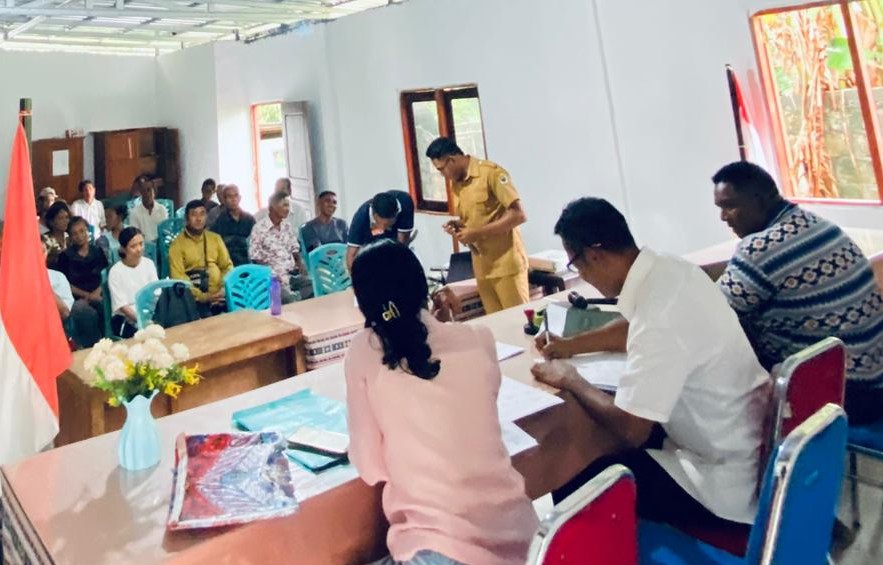
Spotlight on Oenaek Village: A Young Village with Complex Challenges
Oenaek Village is the youngest village in Kupang Regency, formed from the division of Tesabela Village. With a relatively small population and limited human resources, Oenaek faces serious challenges regarding access to clean water, employment opportunities, and protection mechanisms for women and children. However, the village shows strong social capital: women’s involvement in the village governance structure is quite high, religious and ethnic conflicts are almost non-existent, and the community is relatively open to dialogue processes and village policymaking. The biggest challenge in Oenaek is not the lack of rules, but rather strengthening reporting mechanisms, post-case support, and the sustainability of village policies to genuinely side with vulnerable groups.
Inclusion, Diversity, and Field Challenges
In practice, expanding diversity at the village level cannot always be achieved through religious or ethnic representation, especially in villages with relatively homogeneous populations. Therefore, YKPI encourages inclusion by increasing the participation of women, persons with disabilities, and other vulnerable groups in village planning and decision-making processes.
The challenges are significant: restricted information flow from some village officials, differing accounts among community leaders, extreme weather conditions, and limited road access to certain villages. All of this demands a dialogical, patient, and trust-building oriented approach.
Entering January 2026, the CO Team will continue its work with in-depth assessments through key informant interviews and Focus Group Discussions (FGDs) involving village women as primary actors. This process is expected to produce village policy recommendations, capacity building for women’s community groups, and best practices in conflict management, protection of women and children, and climate change adaptation.
This work is not a process that finishes at once. It grows slowly through presence, accompaniment, and trust built together with village communities. Every small step, every conversation, and every courage to speak up becomes part of the long journey towards villages that are more just, inclusive, and empowered.
Stay tuned for our stories of change from community organizing work in the NTT region.
This report is summarized from the field notes of Jeanete N. L. Ayu Aryanti, YKPI Community Organizer for the NTT region.