


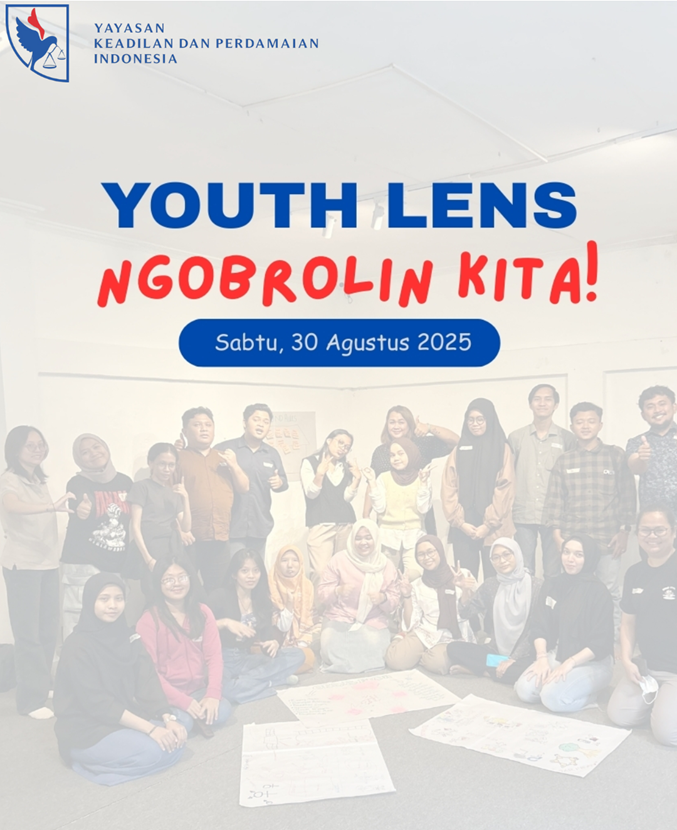
YOGYAKARTA – In the midst of Indonesia’s demographic bonus, the voice of its young generation is not merely a complement, but a fundamental foundation for accelerating inclusive and sustainable development. Recognizing this, a Focus Group Discussion (FGD) was held on Saturday, August 30, 2025, in Yogyakarta, bringing together 25 diverse young representatives, including students, activists, persons with disabilities, transgender women, environmental advocates, and representatives from interfaith communities.
Initiated by AFSC Youth Global, the activity aimed to explore the experiences, knowledge, and aspirations of Yogyakarta’s youth as a microcosm of Indonesia. The outcomes are expected to serve as material for policy advocacy and form part of a global youth consultation network involving countries such as Myanmar, South Korea, the United States, and Palestine.
Opened with Reflection, Built with Solidarity.Fai opened the event in a solemn and reflective atmosphere. Participants observed a moment of silence in response to the heated national political situation. Two participants, Arif and Bila, shared their direct experiences. Arif recounted the last-minute cancellation of an event he had prepared for in Jakarta, while Bila described the chaos and “red zone” situation she witnessed. A message to remain vigilant and seek safety emerged.
The introductory session, facilitated by Rika, was highly interactive. Using a knotted rope as a symbol of networking, each participant introduced themselves, their community, and their dreams and motivations. Their answers were diverse, ranging from hopes for disability equality expressed by Jaka, a Deaf participant, to ambitions of building an inclusive organization shared by Widya, an environmental activist. This diversity of answers represented the wealth of aspirations present.
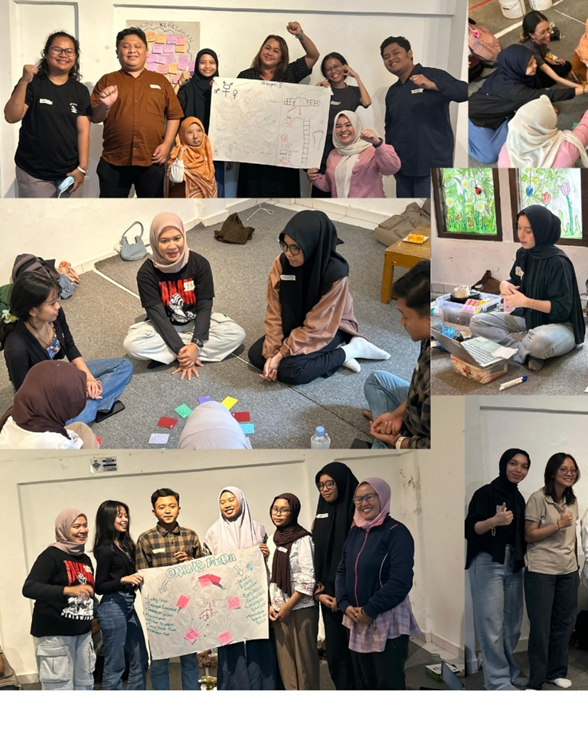
In the next session, participants were then divided into three discussion groups. Using a method of selecting illustrated cards, they shared personal experiences and challenges related to the chosen images. The issue of discrimination against minority groups was prominent. Olla from the Transwomen Jogja Community spoke about the multi-layered challenges faced by transgender women, from family rejection and employment difficulties to fear of worshiping. Jaka, a Deaf artist, shared his bitter experiences of being bullied and his struggle to communicate. He emphasized the critical need for Sign Language Interpreters (JBI) in public spaces and institutions.
Access issues, particularly for vulnerable groups, were another central problem. Ridwan shared his experience mentoring students with disabilities and highlighted the lack of accessible campus facilities. Bunga, who has special needs, communicated the challenges of communicating with family members who do not use sign language. Merry, an alumnus of YKPI Internship, added concerns about the stark technological access inequality in Indonesia’s Frontier, Outermost, and Disadvantaged (3T) regions.
Other anxieties emerged related to economic and social pressures. Aini, who will soon graduate, expressed anxiety about the difficulty of finding a job despite her high level of education. Meanwhile, the police card chosen by Idha sparked a discussion about negative perceptions and distrust towards law enforcement officials.
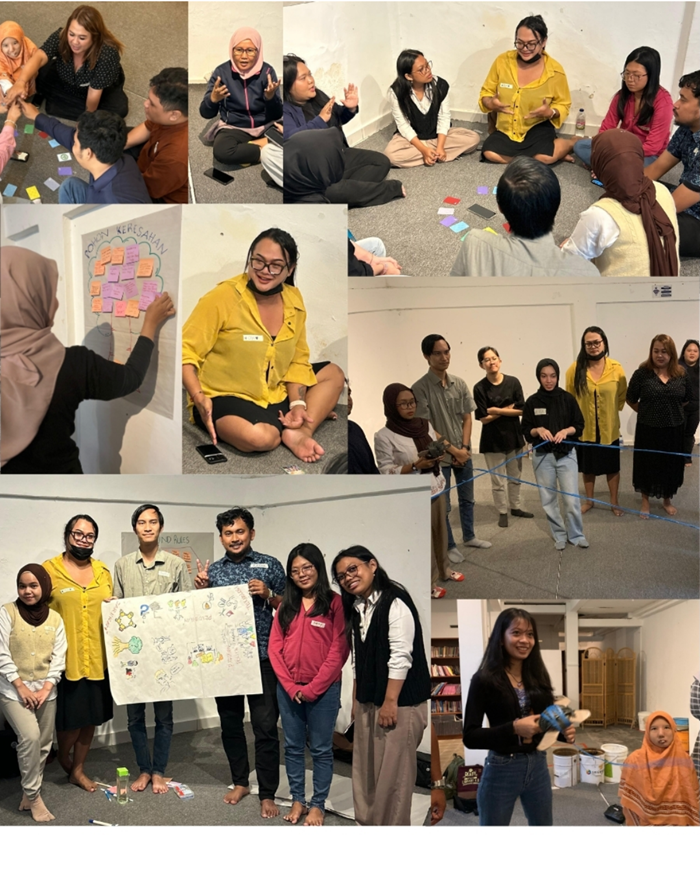
After pouring out their anxieties, participants were guided to transform them into concrete opportunities and recommendations. Each group presented its discussion results. Group 1 saw opportunities in strengthening community networks and leveraging technology for campaigns and education to minimize discrimination. They advocated for the increased involvement of educated youth as agents of change.
Group 2 focused on education as both the root of the problem and the solution. They highlighted the enforcement of rules (such as the hijab) and gender discrimination in schools. The opportunities they proposed included social media campaigns, informal education, and the instillation of values like moderation and inclusivity from an early age.
Group 3 visually depicted solutions with five drawings of hands symbolizing collective strength and cooperation. Their recommendations were the most comprehensive, encompassing: Creating participation spaces for youth in policymaking. Providing funding for youth initiatives. Enforcing laws equally for all. Building inclusive infrastructure, including in villages. Providing safe spaces and psychosocial support for victims or those in need. Free education is accessible to all societal groups. And Fair policies from the government.
The Focus Group Discussion concluded with an emotional check-in, where participants shared their impressions. A mix of solemnity, spirit, and hope was palpable. This event successfully not only documented the critical voices of Yogyakarta’s youth but also wove threads of solidarity and collaboration. The network formed is hoped to be a driving force in realizing a more inclusive, just, and dignified development for Indonesia, where young people are not objects, but the primary subjects of development.
For further information about AFSC Youth Global, please contact the Indonesian Justice and Peace Foundation (Yayasan Keadilan dan Perdamaian Indonesia).